CART go to cart
Books
Total
FREE SHIPPING COSTS
FOR ORDERS OVER
35 € TO ITALY
80 € TO EUROPElimits and conditions
#267591 Ebraica

Theater of Acculturation: The Roman Ghetto in the Sixteenth Century.

Author:
Publisher: University of Washington Press.
Date of publ.:
Details: cm.16x24, pp.X,246, hardcover, dustjacket.

Abstract: Generations of tourists visiting Rome have ventured into the small section between the Tiber River and the Capitoline Hill whose narrow, dark streets lead to the charming Fountain of the Tortoises, the brooding mass of the Palazzo Cenci, and some of the best restaurants in the city. This was the site of the Ghetto, within whose walls the Jews of Rome were compelled to live from 1555 until 1870. Kenneth Stow, leading authority on Italian Jews, probes Jewish life in Rome in the early years of the Ghetto.Jews had been residents of Rome since before the days of Julius Caesar, but the 16th century brought great challenges to their identity and survival in the form of Ghettoization. Intended to expedite conversion and cultural dissolution, the Ghetto in fact had an opposite effect. The Jews of Rome developed a subculture, or microculture, that ensured continuity. In particular, they developed a remarkably effective legal network of rabbinic notaries, who drew public documents such as contracts, took testimony, and arranged for disputes to go to arbitration. The ability to settle disputes relating to marriage, divorce, inheritance, and other internal matters gave Jews the illusion that they, rather than the papal vicar, were running their own affairs.Stow applies his concept of “social theater” to illuminate the role-playing that Jews adopted as a means of survival within the dominant Christian environment. He also touches briefly on Jewish culture in post-Emancipation Rome, elsewhere in Europe, and in America, and points the way toward a comparison with the acculturational strategies of other minorities, especially African Americans.

EAN: 9780295980256
ConditionsUsato, molto buono
Note: Minimi segni a penna al margine di alcune pagine, altrimenti come nuovo.
EUR 9.90
Last copy
Add to Cart

Recently viewed...

Firenze, Vallecchi Ed. 1948, cm.13,5x19,5, pp.146,(4), brossura con cop.fig.a col.
EUR 11.00
2 copies
#258569 Ebraica
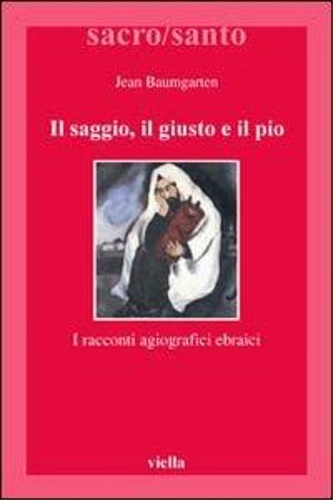
Roma, Viella Ed. 2007, cm.14x21, pp.312, brossura con bandelle, copertina figurata a colori. Collana Sacro/Santo, 11. L’opera propone un tema finora assente dalla storiografia: l’agiografia ebraica. Partendo dalla tradizione ebraica, e in primo luogo dai testi biblici, l’autore segue il percorso storico attraverso il quale brevi racconti a carattere esemplare si trasformano con il tempo in autentiche narrazioni agiografiche e infine danno vita a specifiche raccolte pubblicate anche a stampa. Ma – a differenza dei santi della storia cristiana – il saggio (hakham) e il pio (hasid) nella cultura ebraica sono considerati come tali solo dalla propria comunità, a favore della quale agiscono in molteplici modi. Non sono infatti oggetto di un riconoscimento istituzionale; anzi, la loro esperienza si pone spesso in contrasto con le autorità religiose e con i rabbini. Il libro studia questo aspetto della storia delle comunità ebraiche, in particolare quelle ashkenazite dell’Europa centro-orientale nelle quali, a partire dalla prima età moderna, la pietà religiosa si nutrì di narrazioni incentrate su personaggi e figure d’eccezione.

EAN: 9788883341717
Nuovo
EUR 29.00
-34%
EUR 19.00
Available
A cura di Umberto Eco, Laura Barletta, Gilberto Corbellini, Pietro Corsi, Anna Ottani Cavina, Ezio Raimondi, Luca Marconi. Milano, Il Corriere della Sera 2008, cm.14,5x22, pp.610 ill.a colori. legatura editoriale copertina figurata a colori.
Usato, come nuovo
EUR 8.00
Last copy